

USDA Organic
At least 95% organic ingredients, excluding salt and water. “Made with organic” means at least 70%, and that product cannot carry the seal.
USDA labeling rules ↗Education & resources
Nobody taught me any of this. It is what I check now — on a supplement bottle and in a grocery store — with the source for every fact, so you can check it too.
Supplements
The Supplement Facts panel names the form. Vitamin E is the clearest example: d-alpha-tocopherol is naturally sourced, dl-alpha-tocopherol is synthetic. One letter.
Watch me test itA company that publishes what it tests for has to keep testing for it. A company that doesn't publish anything is asking you to take its word.
What NeoLife publishesNot a mechanism in a dish, and not someone else's ingredient study borrowed for a label. The product, in humans.
Published, named and linkable. For what I carry, NeoLife posts a Clinical Support document for each product — here is the one for Vitamin E Plus.
Vitamin E Plus clinical support (PDF)Why I bother asking
75%
6 of 13
The grocery store
Shop the perimeter of the store.
Produce, meat, fish and eggs live around the edges. The middle aisles are mostly packaging.
Fresh, organic, non-GMO.
Where the budget runs out, the produce lists below tell you where organic matters most.
Skip what comes in a box, packet or can.
If it needs a long ingredients list to survive on a shelf, I leave it there.
No seed oils, refined sugars or refined grains.
Read the ingredients, not the front of the pack — they turn up in things that are sold as healthy.
Wild-caught fish, grass-fed beef, organic pasture-raised eggs.
How the animal was raised is part of what ends up on the plate.
Seals worth knowing
At least 95% organic ingredients, excluding salt and water. “Made with organic” means at least 70%, and that product cannot carry the seal.
USDA labeling rules ↗Verified by the Non-GMO Project, an independent nonprofit. It covers genetic modification only — it is not an organic certification.
Non-GMO Project ↗Names like CCOF or Oregon Tilth on a pack are the organisation that inspected the farm under USDA rules. On imports you will see the EU organic leaf, Japan’s JAS mark or Australian Certified Organic.
A five-digit code starting with 9 is organic — the usual four-digit code with a 9 in front. Stickers are optional, so a missing 9 does not prove anything either way.
IFPS produce codes ↗Where organic matters most
Every year the Environmental Working Group ranks produce by pesticide residue in USDA testing. If you can only buy some of it organic, start with the first list.
Dirty Dozen™ 2026
Most residue — worth buying organic
Clean Fifteen™ 2026
Least residue — conventional is fine
Source: EWG’s 2026 Shopper’s Guide to Pesticides in Produce™. EWG updates the rankings each year — see the current guide ↗
At the sink
Before it goes in the pot, check the sticker: a five-digit code starting with a 9 means it was grown organically. Then wash it properly.
Why the spray stays put
Crop sprays are often mixed with additives called “stickers”, made to hold the spray on the plant. In Cornell Cooperative Extension’s words: “Stickers increase the adhesion of solid particles to a target surface. They can help reduce evaporation and the amount of pesticide that washes off during rain.”
Cornell Cooperative Extension — Using Adjuvants in Your Pesticide Program ↗In the film I soak the head in a bowl of water with a little of NeoLife’s Green, then rinse it — watch how differently the water runs off afterwards. It is a demonstration at my counter, not a lab test.
What’s in the bowl
Green – Liquid Cleaning Concentrate · SKU 4194
All-in-one liquid cleaning concentrate, made with pure aloe vera juice and plant-derived protein. — NeoLife
View Green in my storeAt home
Most “houseplants for clean air” graphics trace back to one 1989 NASA study — then add plants it never tested. These are the ones it did.
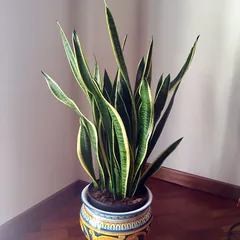 Snake plantSansevieria trifasciata ‘Laurentii’
 Peace lilySpathiphyllum ‘Mauna Loa’
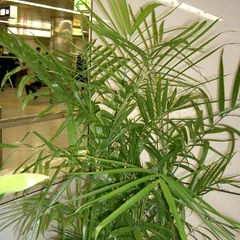 Bamboo palmChamaedorea seifrizii
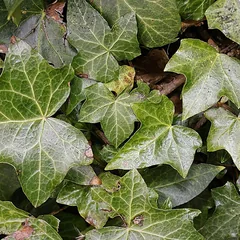 English ivyHedera helix
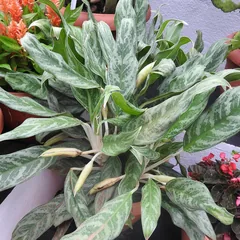 Chinese evergreenAglaonema modestum
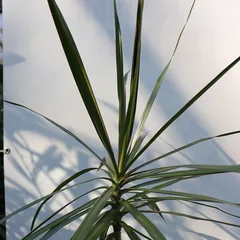 DracaenaFour varieties testedRed-edged, cornstalk, ‘Janet Craig’ and ‘Warneckei’
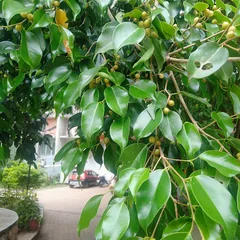 Weeping figFicus benjamina
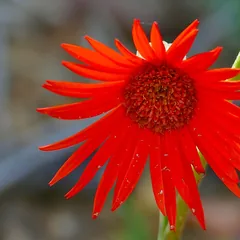 Gerbera daisyGerbera jamesonii
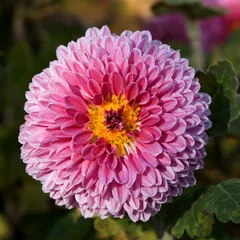 ChrysanthemumChrysanthemum morifolium
Keep learning
Everything on this page is general education, not medical advice. If you have a health condition or take prescription medication, talk to your physician before changing your diet or adding a supplement.
Ready when you are
You order through NeoLife. I get the commission, you get someone who picks up the phone.