

Nothing hidden

Every step,on the record.

Most supplement brands test one thing — whether the active ingredient is actually in there. NeoLife tests five. This is the whole process, including the parts that never make it onto the front of a label.

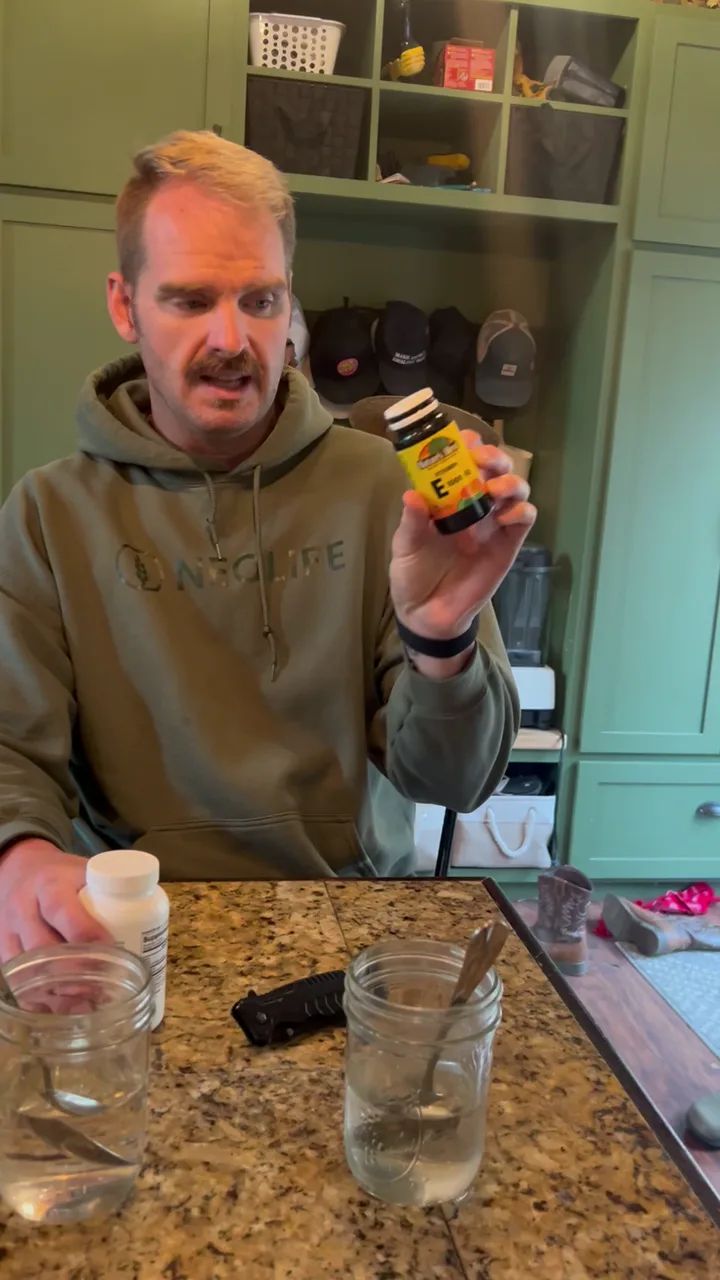
Joseph holding a NeoLife vitamin E bottle at his kitchen counter

Isolates and concentrates

A vitamin can be assembled, or it can be grown.

A synthetic supplement supplies an isolated compound, synthesised in a plant and pressed into a tablet. On paper it matches the label exactly, because the label lists the compound.

A whole-food concentrate takes the food itself and concentrates it, so the compound arrives with the other constituents it grew alongside. An isolate gives you ascorbic acid. An orange gives you ascorbic acid plus the fibre, bioflavonoids and carotenoids it grew with.

There is a middle category too: one nutrient isolated from a natural source instead of made by chemical synthesis. Natural-source vitamin E, distilled out of vegetable oils, is the familiar example. It is the natural form, which matters — but it is still a single compound, not the food it came from.

Which of those you are holding is not usually obvious from the front of the bottle. It is the single most useful thing I learned.

What gets tested

Five screens, where the standard is one.

The industry norm is a potency test: is the active ingredient present, at the amount claimed. That is the whole check for most products on a shelf.

NeoLife publishes a five-part protocol for every batch of creatine. Alongside potency they screen for elevated creatinine — the breakdown product, whose presence means the creatine has already degraded — and for dicyandiamide and dihydrotriazine, two common manufacturing impurities, and for residual agricultural pesticides.

Four of those five are things you would never know to ask about. That is the point of publishing them: a company that lists the tests it runs has to keep running them.

Where it comes from

Ten checkpoints, from the seed to the batch number.

NeoLife publishes a ten-point process for its whole-food ingredients, and it starts before anything is grown: the seed stock is selected, the fields are chosen for being in the least disturbed environments available, and the crops are monitored before they are harvested.

They are harvested when nutrient content is highest, tested again on the way to processing, and concentrated with as little processing as possible. Then every ingredient is held in quarantine — nothing is released for use until the lab has confirmed its purity and potency.

The finished batch is tested again and samples are kept. Every label carries a batch number that traces each ingredient back to where it started, so if you ever want to know where the contents of your bottle came from, that number is the question to ask.

Source: NeoLife’s 10-point quality process ↗

What is deliberately absent

The other half of a label.

GMO free, vegan, gluten free, no added sugar, and no artificial colours, flavours, sweeteners or preservatives.

Free from substances banned by the NCAA, IOC and WADA — which matters if you are tested, because it means you can take it without filing anything.

Not sold in retail stores. There is no reseller between the manufacturer and you, and no grey-market stock of unknown age sitting in a warehouse.

Reading a label

What I look at now, in order.

The source line before the quantity. A large number tells you how much of something is in there; it does not tell you where it came from or what came with it.

The form of each nutrient, because the same vitamin name covers several different chemical forms, and they are not interchangeable.

The other ingredients list, which is where the fillers, binders and coatings live and where a lot of the difference between two similar-looking products actually sits.

Filmed at my kitchen counter. Two vitamin E softgels, two jars of water.

Reading a label, in practice

Two bottles of vitamin E. One letter apart.

The front of a bottle can say anything. The Supplement Facts panel has to name the form, and for vitamin E the form comes down to a single letter.

dl-alpha-tocopherolsynthetically produced
d-alpha-tocopherolnaturally sourced

The National Institutes of Health puts it plainly: “Naturally sourced vitamin E is called RRR-alpha-tocopherol (commonly labeled as d-alpha-tocopherol); the synthetically produced form is all rac-alpha-tocopherol (commonly labeled as dl-alpha-tocopherol).” They also note there are eight natural forms of vitamin E, not one. NIH vitamin E fact sheet ↗

In the film I stir both into water. That shows you how each one behaves in water — it is a demonstration, not a lab test, and it is not a measurement of what your body absorbs. Check the panel on anything you already own; it takes ten seconds.

What the NeoLife bottle says

Vitamin E Plus · SKU 3340 (100 softgels) · 3341 (200 softgels)

Supplement Facts, serving size 2 softgels
Per 2 softgelsAmount%DV
Vitamin E (as d-alpha-tocopherol)369 mg (550 IU)2460%
Wheat germ oil550 mg†
Mixed non-alpha-tocopherols100 mg†

† Daily Value not established.

“Delivers all 8 forms of natural vitamin E for broad spectrum protection.*” — NeoLife

*These statements have not been evaluated by the Food and Drug Administration. This product is not intended to diagnose, treat, cure or prevent any disease.

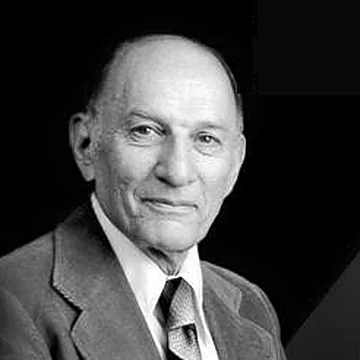
Dr. Arthur Furst, founder of NeoLife's Scientific Advisory Board
Dr. Arthur Furst, Ph.D., Sc.D. · 1914–2005Photo: NeoLife

The scientist behind the standard

It started with a toxicologist.

NeoLife’s Scientific Advisory Board — the doctors and scientists who develop every formula — was founded by Dr. Arthur Furst: a Stanford-trained chemist NeoLife calls a pioneer in toxicology, the science of what is and is not safe to put into a body.

He spent 34 years on the faculty of the University of San Francisco, where he founded its Institute of Chemical Biology, and 25 years as a senior member of NeoLife’s board. NeoLife credits his research as the foundation for many of its products.

His name is still on a University of San Francisco research award, and on an annual NeoLife lecture series on nutrition at the Stanford Health Library. It is why the testing on this page starts with what should never be in the bottle.

Ph.D.
Chemistry, Stanford University, 1948
34 yrs
on the University of San Francisco faculty
25 yrs
on NeoLife’s Scientific Advisory Board

How NeoLife works

Made to a standard it is not required to meet.

NeoLife states it has been making whole-food based nutritional supplements since 1958, with every formula developed by its Scientific Advisory Board of doctors and scientists.

It makes them in its own facilities, and holds a drug manufacturing licence from the State of California and another from Australia’s TGA — even though it does not make drugs. The licences are the point: they mean the plants are run to the manufacturing standard medicines are held to. It is also registered with the FDA.

Human clinical studies on NeoLife products have been published in the Journal of the American College of Nutrition, the International Journal of Toxicology, the FASEB Journal and the American Journal of Clinical Nutrition. NeoLife is a member of the Council for Responsible Nutrition.

The Pro Vitality pack is built from four sources — whole grains, fruits and vegetables, cold-water fish, and essential vitamins and minerals. That four-in-one structure is the argument on this site, in a box.

Those are the company’s own descriptions of their process. I am an independent distributor, not the manufacturer, and I have not independently verified their manufacturing.

Source: The NeoLife difference, in NeoLife’s words ↗

What I will not tell you

The line I keep, and why.

Nutritional supplements are not intended to diagnose, treat, cure or prevent any disease, and I will not imply otherwise about any product on this site — not in a testimonial, not in my own story, not in a conversation.

If someone selling you a supplement tells you it treats a condition, that is a reason to be more careful, not less.

Every figure and every asterisked claim on this site is NeoLife's, taken from their own published Fast Facts sheets and product labels, and carries their FDA disclaimer. I have not independently verified their manufacturing — nobody outside the company can. What I can tell you is exactly where each number came from.

If you have a medical condition, a health concern, or take prescription medication, speak to a physician or another qualified healthcare professional before changing your nutrition or supplement routine.

Ready when you are

Everything I take, in one place.

You order through NeoLife. I get the commission, you get someone who picks up the phone.